


Most buyers who land in Yiwu for the first time face the same problem: a market the size of a small city with no clear starting point.
Yiwu Market District 1 is where most international buyers begin — and the reasons become obvious once you walk the floor.
We have worked this market since 2004, guiding buyers from more than 200 countries through its sections and supplier booths.
This guide covers what each floor sells, realistic MOQs by category, and how to buy — whether you visit in person or source through an agent from home.
| Yiwu Market District 1 is the oldest section of the Yiwu International Trade City, opened in October 2002. It covers 340,000 m² across 4 floors and holds more than 10,500 supplier booths. Products span toys, artificial flowers, jewelry, crafts, and festival decorations. Over 70% of goods ship to buyers across more than 200 countries. |
What Is Yiwu Market District 1?
The Yiwu International Trade City spans five districts and more than 2.1 million square metres in total. District 1 is the oldest of the five. It opened in October 2002 and has run at full capacity ever since — which is part of why most first-time buyers start here rather than anywhere else.
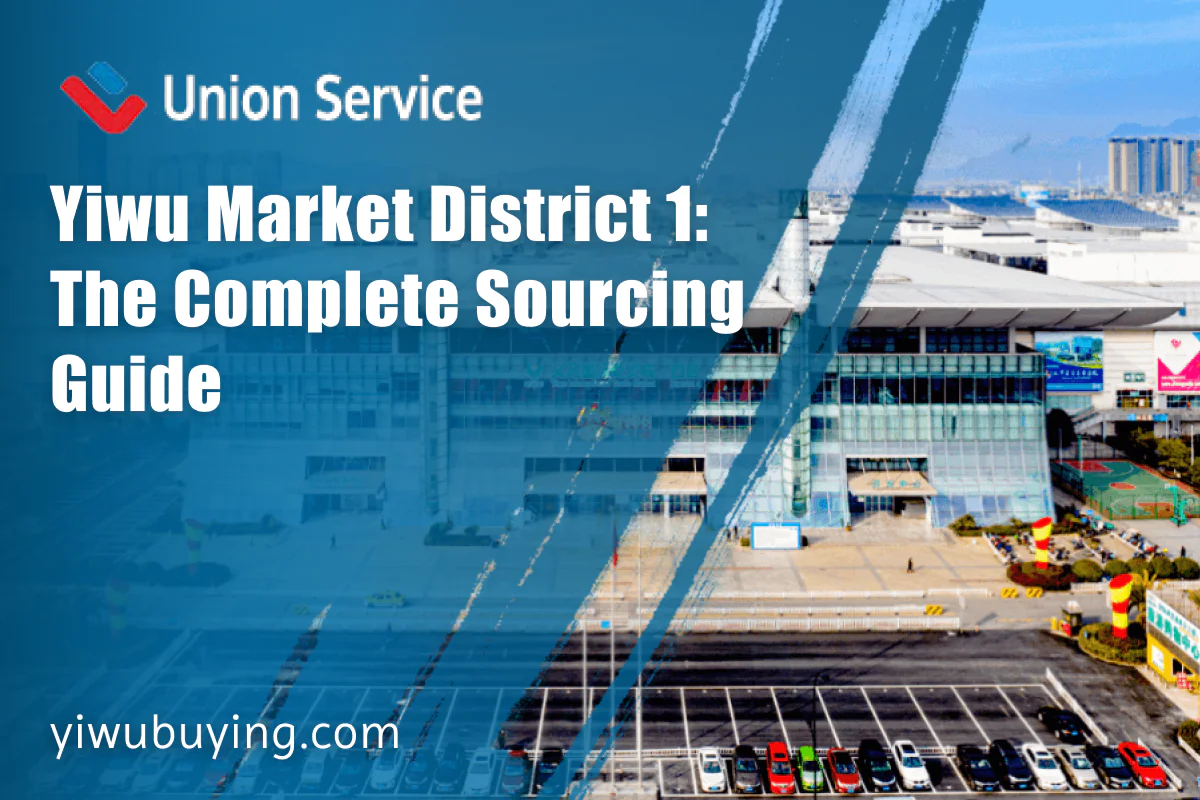
Yiwu International Trade Market District 1 officially opened on October 22, 2002. The district covers approximately 340,000 square meters and includes more than 10,500 business entities. It is organized into four main floors, with toys and flowers on the first floor, jewelry on the second, arts and crafts on the third, and factory outlet businesses on the fourth. see our Yiwu market guide.
Because District 1 groups toys, flowers, jewelry, and crafts inside one building, buyers can compare dozens of suppliers within a single category without crossing to another district. That matters on a short trip. You can cover your core product range in one structured day rather than three unplanned ones.
On arrival, go straight to the guide board near the main entrance before you walk a single aisle. Every product category is listed by floor and section code. Ten minutes with that board prevents two hours of wrong turns — particularly on Floor 1, where the toy and flower sections share a layout that looks identical at first approach.
Understanding the layout is the first step. The next is knowing exactly what each floor sells.
What Products Can You Source From District 1?

District 1 organizes products by floor, which makes category sourcing faster than most buyers expect on a first visit. Every floor has a clear focus. Walking straight to the right floor rather than browsing all four cuts sourcing time in half.
District 1 sells toys, artificial flowers, jewelry and accessories, arts and crafts, photo frames, festival decorations, and ceramics across 4 floors. Over 10,500 booths supply buyers in more than 200 countries. Floor 1 covers toys and artificial flower wholesale. Floor 2 focuses on jewelry accessories and fashion items. Floor 3 handles crafts wholesale, ceramics, and festival goods. Floor 4 holds the factory outlet and foreign trade sourcing centre.
Floor 2 moves faster than any other section in the building. Trend cycles for jewelry accessories in this section run 60–90 days — new styles replace older ones roughly every quarter. Serious buyers in jewelry and hair accessories visit at least twice a year to keep their range current.
Floor 4 gets skipped by most first-time visitors, but the factory outlet section there often carries the same items as Floors 1–3 at lower per-unit prices. If you already know your product and want the best unit cost, start at Floor 4 before working down. This works best for buyers re-ordering lines from a previous sourcing trip.
The official Yiwugo market directory organizes District 1 by product category and floor, making it possible for buyers to identify target sections before visiting.
Knowing which floor to target is half the work. The numbers below give you a realistic benchmark before negotiations start.
Official District 1 Floor Guide
| Floor | Main Products |
|---|---|
| 1F | Artificial flowers, flower accessories, toys |
| 2F | Hair ornaments, jewelry |
| 3F | Festival crafts, decorations, ceramics, crystals, photo frames |
| 4F | Factory outlets and selected products |
Key Numbers Every Buyer Should Know
Numbers run this market. Buyers who arrive with a clear picture of typical order sizes, visitor volumes, and payment terms close deals faster than those who work it out on the floor. This section covers the figures that matter most.
MOQs at the Yiwu wholesale market District 1 are lower than most buyers expect. Jewelry accessories typically start at 1 dozen per style. Artificial flowers run 50–100 stems per design. Toys fall in the range of 50–200 units per SKU depending on type. These figures mean small importers can fill a mixed container across multiple suppliers without hitting a wall on minimums.
According to ChinaGoods, Yiwu International Trade Market District 1 receives more than 80,000 visitors per day on average, including around 3,000 foreign visitors. The platform also states that more than 70% of products are intended for export and that more than 95% of vendors can handle international trade. That export focus means suppliers here understand international packaging requirements, shipping documentation, and FOB pricing far better than suppliers in purely domestic-facing markets.
A UK gift shop buyer we worked with placed orders across 6 suppliers on Floors 2 and 3. We consolidated everything through our 13,000 m² warehouse in Yiwu before shipment. She paid one freight bill instead of six — cutting her logistics costs by more than half compared to her previous trip, when she handled shipping herself.
The numbers clarify the opportunity. The next question is whether District 1 suits your business type.
Who Is District 1 Best Suited For?
District 1 does not serve every buyer equally well. Understanding who it suits — and who it does not — saves time before you book a flight or put together a product brief.
District 1 suits Amazon and eBay sellers, gift shop buyers, small importers, and seasonal décor buyers best — particularly anyone sourcing Yiwu District 1 jewelry, toys, artificial flowers, or crafts at accessible MOQs. The product mix is globally familiar, order sizes are flexible, and the supplier density means you can compare prices within one category in under an hour.
Small and medium retailers sourcing from District 1 typically visit once or twice a year and ship 1–2 containers per trip. Buyers in this bracket consistently report stronger profit margins on jewelry and toy categories than when sourcing from domestic wholesale suppliers back home. The price gap is widest on fashion accessories and seasonal items, where Yiwu factory costs are hard to match.
If you sell on a seasonal cycle — Christmas décor, Valentine’s gifts, or Halloween products — visit District 1 three months before your peak season, not six weeks out. You need time for production, QC, and sea freight. Suppliers refresh festival and crafts categories quarterly, so arriving early gives you first pick on new designs. If you plan to combine a District 1 trip with Canton Fair, see our Canton Fair 2026 guide for how to structure both visits.
For buyers who need industrial goods, textiles, or electronics, Districts 2–5 are the right fit. For the categories District 1 covers, the buying process below applies whether you visit in person or source from your desk.
How to Buy From District 1 — Step by Step
Most guides on District 1 list what it sells. Few explain what actually happens from order confirmation to goods arriving at your warehouse. This section covers both paths: visiting in person and sourcing remotely through an agent.
A US home décor retailer sourced 4 product categories across 3 supplier booths on Floors 1 and 3 — without visiting China. She sent us reference images and a target price range. Within 48 hours we returned quotations and physical sample photos. Her consolidated container left our Yiwu warehouse 5 weeks after she confirmed the orders.
A 30% deposit with the remaining balance before shipment is a common arrangement in international manufacturing and sourcing, but payment terms vary by supplier, order size, product type, and relationship. Always confirm payment terms in the sales contract or purchase order. Suppliers may quote on different Incoterms depending on the transaction. FOB, EXW and other arrangements may be available, so buyers should confirm exactly where responsibility for transport, export clearance, insurance, and risk transfers.
A local sourcing agent compresses a 3-day sourcing trip into one structured day. Your agent pre-selects booths by category, handles Mandarin negotiation, arranges sample collection, and documents every supplier you visited. You spend your time making decisions, not searching for the right aisle. For buyers visiting China for the first time, this difference is significant.
The process itself is predictable. What trips buyers up are the avoidable mistakes covered next.
Mistakes First-Time Buyers Make in District 1
First-time buyers lose time and money at District 1 in predictable ways. Most errors come down to preparation, not the market itself.
Do not try to cover all 4 floors in one visit. Choose 2 target product categories, map the relevant floors, and walk those sections thoroughly. Buyers who try to see everything typically leave with no orders. They run out of time and energy before they reach their strongest suppliers.
A buyer from South Africa placed orders with 8 District 1 suppliers without consolidating. Each supplier shipped directly to his freight forwarder. He received 8 separate invoices, 8 customs entries, and 8 freight charges. The same order, routed through a single consolidation warehouse, would have shipped as one container at roughly 40% of what he paid in total freight.
Payment methods vary by supplier. International buyers should confirm whether a supplier accepts RMB cash, bank transfer, Alipay, WeChat Pay, or other payment methods before placing an order. Buyers without RMB either overpay at the currency exchange counters inside the building or miss orders because they cannot close on the spot. Arrange a cash draw through your hotel or agent before your first day on the floor. Other common errors: skipping samples before placing full orders, visiting during Chinese New Year when the market closes, and sending each supplier’s goods separately instead of consolidating.
Frequently Asked Questions About Yiwu International Trade Market District 1
What does Yiwu Market District 1 sell?
Yiwu International Trade Market District 1 mainly specializes in toys, artificial flowers and flower accessories, jewelry and hair accessories, festival and wedding crafts, decorations, ceramics, crystals, photo frames, and related small commodities. The official Yiwu market directory lists these categories across the different floors of District 1.
What does each floor of Yiwu Market District 1 sell?
Floor 1 mainly covers artificial flowers, flower accessories, plush toys, inflatable toys, electric toys, and other toys. Floor 2 focuses on hair ornaments and jewelry. Floor 3 includes festival and wedding crafts, decorations, porcelain, crystals, photo frames, and accessories. Floor 4 includes factory outlet businesses and selected home decoration, ornaments, Christmas, artificial flower, jewelry, and related products.
Is Yiwu Market District 1 suitable for small businesses?
Yes. District 1 can be suitable for small importers, retailers, gift shops, online sellers, and businesses that need a wide range of small commodities. However, MOQ varies significantly between suppliers and product categories, so buyers should confirm the actual MOQ, sample policy, packaging requirements, and pricing with each supplier before ordering.
What is the MOQ at Yiwu Market District 1?
There is no single MOQ for District 1. Minimum order quantities depend on the product, supplier, customization requirements, packaging, and whether the order is a repeat purchase. Some suppliers may accept relatively small wholesale quantities, while customized or factory-direct orders can require higher quantities. Always confirm MOQ before placing an order.
Do I need a sourcing agent to buy from Yiwu Market District 1?
You can visit District 1 and communicate directly with suppliers without an agent. However, an experienced sourcing agent can help with supplier selection, Chinese-language communication, price negotiation, sample collection, order coordination, quality inspection, consolidation, and shipping. Whether an agent is worthwhile depends on your experience, order size, language ability, and sourcing requirements.
Can I source products from District 1 without traveling to China?
Yes. Buyers can use online Yiwu sourcing platforms or work with a local sourcing agent to identify suppliers, request quotations, collect samples, coordinate orders, inspect goods, and consolidate shipments without visiting Yiwu. Online sourcing can be useful for repeat orders or buyers who already have clear product specifications.
What are the opening hours of Yiwu Market District 1?
Opening hours can vary by market management, holidays, and individual suppliers. Buyers should confirm the latest schedule before traveling rather than relying on an old opening-hours listing. The official Yiwu market platforms should be checked for current market information before arranging a visit.
How many days do I need to visit District 1?
One full day can be enough for buyers who have a focused product list and already know which floors and categories they need to visit. Buyers sourcing multiple categories or comparing many suppliers may benefit from two or more days. Preparing a supplier shortlist and mapping target product categories before arrival can make the visit much more efficient.
How do I find reliable suppliers in Yiwu Market District 1?
Start by recording the supplier’s booth number, company name, product specifications, MOQ, quotation, payment terms, and contact information. Request samples before placing large orders and verify the supplier’s company information where appropriate. For significant purchases, consider a factory audit, supplier verification, or pre-shipment inspection before making the final payment.
How can I ship products purchased from District 1?
After suppliers complete production or prepare stock, goods can be collected and consolidated at a Yiwu warehouse before international shipment. Depending on the order volume and destination, buyers may use LCL, FCL, air freight, express delivery, rail, or other logistics solutions. The most suitable method depends on cargo volume, product characteristics, destination, delivery time, and total landed cost.
Ready to Source From District 1?
District 1 is where most international buyers start in Yiwu — the product variety is high, MOQs are accessible, and the floor layout suits efficient category sourcing across a single visit.
We have operated in this market since 2004 and have shipped District 1 goods to buyers in more than 200 countries.If you are planning a sourcing trip or want to place an order without visiting China, tell us your product categories and we will arrange the rest.