


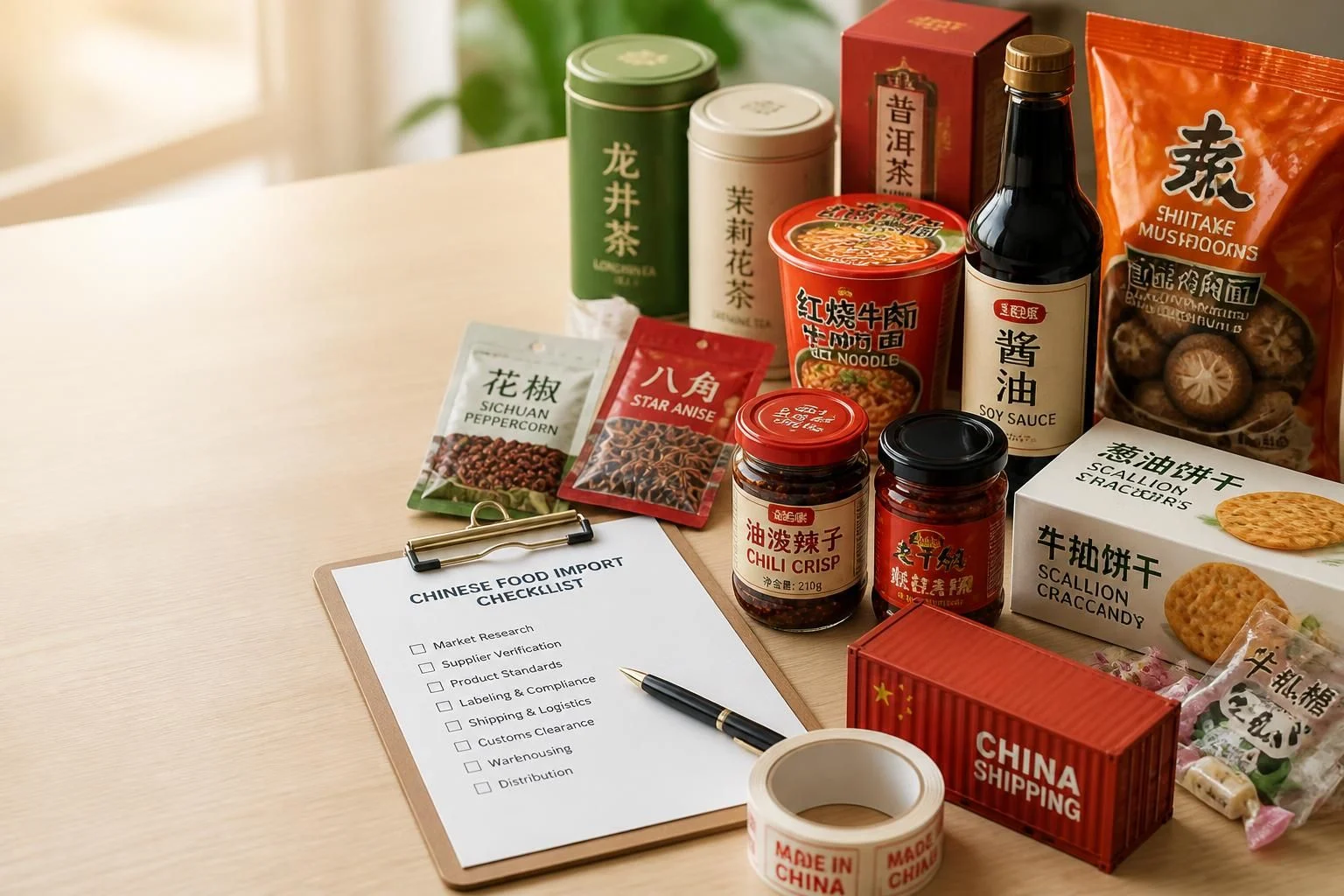
“Best-selling” sounds precise. For an importer, it rarely is. A product can be familiar to shoppers and still fail on label language, shelf life, packaging, freight, or destination-market rules. This guide turns the phrase into something useful: 20 food product candidates worth testing with your own demand evidence and supply chain.
The list is designed for retailers, distributors, specialty grocers, food-service buyers, and private-label teams. It does not claim that every item sells well in every country. It also does not provide legal, customs, food-safety, or labelling advice. Check the exact product and destination with the relevant regulator, broker, importer of record, and qualified adviser before paying a deposit.
Key Takeaways
- The 20 entries are candidates to validate, not a universal global sales ranking.
- Start with demand, formula and label fit, shelf life and route, then supplier and sample evidence.
- Tea, noodles, sauces, snacks, spices, and confectionery can be practical shelf-stable screens, but every SKU still needs product-specific review.
Evidence status: This is an editorial sourcing shortlist, not a market-sales study. It contains no unsupported sales percentages or profit claims. Before publication, the final market, product category, and regulatory statements must be checked against current official guidance and reviewed by a qualified adviser for that importing jurisdiction.
How Should You Choose Food Products to Import From China?
A realistic import candidate passes four screens: buyer demand, product and document fit, shelf-life and route fit, and supplier and sample evidence. This is an editorial framework, not a regulator’s approval sequence. It prevents a common mistake: choosing a low factory quote before checking whether the finished product can be sold and delivered in usable condition.
First, prove demand in your own channel. Review sales history, search data, competitor pricing, buyer interviews, or a controlled test. A product that moves in one market may not move in yours. Then write a product brief with pack size, ingredients, target price, shelf life, storage conditions, label language, order estimate, and launch date.
Second, ask whether the exact formula and pack can follow the destination route. Depending on the market, ingredients, allergens, additives, animal origin, alcohol, claims, packaging, and temperature requirements may change the answer. A supplier’s domestic label or generic certificate is not, by itself, proof of overseas eligibility.
Third, model the route. A long shelf life at the factory is not the same as a long shelf life when the goods arrive, clear customs, reach your warehouse, and sit on a retail shelf. Carton cube, breakage, humidity, heat, and cold-chain handovers can erase a unit-price advantage.
Finally, compare suppliers against the same brief. Get a sample, product specification, ingredient and allergen information, packaging details, lot/date approach, available test evidence, and a quotation that names the contracting party and Incoterm. Could you compare two prices fairly if their pack sizes and formulas differ? Usually, you cannot.
The four-screen method is deliberately stricter than a trend list. A product advances only when the demand case and the operational case work together. This is why the list below uses “starter screen,” “needs product review,” and “specialist route” labels instead of invented profit scores.
For broader process guidance, read our food sourcing from China guide before contacting factories. That guide covers the order sequence; this page helps you decide which product briefs deserve that work.
What Are the 20 Food Products Worth Shortlisting in 2026?
The products below are commercial candidates, not claims of universal sales leadership. Start with three to five that fit your channel. Have each supplier provide like-for-like samples and evidence before you rank them.
| # | Product candidate | Typical buyer format | First check | Screen |
|---|---|---|---|---|
| 1 | Green or black tea | Loose leaf, tea bags, tins | Origin, blend, residues/testing route, label, shelf life | Needs product review |
| 2 | Jasmine or floral tea blends | Loose leaf or tea bags | Ingredients, flavourings, allergen statement, claims | Needs product review |
| 3 | Instant noodles | Cups or packets | Seasoning ingredients, allergens, nutrition, label | Needs product review |
| 4 | Rice noodles and vermicelli | Dried retail packs | Ingredients, cooking instructions, carton integrity | Starter screen |
| 5 | Chili crisp and chili oil | Jars or pouches | Formula, allergens, oil stability, seal, destination rules | Needs product review |
| 6 | Soy sauce and cooking sauces | Bottles, sachets, food-service packs | Formula, allergens, leakage, label | Needs product review |
| 7 | Vinegar and cooking wine | Bottles | Ingredient/acid/alcohol position, classification, label | Needs product review |
| 8 | Dried spices and seasoning blends | Jars, sachets, refills | Ingredients, allergens, contaminants, claims | Needs product review |
| 9 | Dried mushrooms | Pouches or food-service packs | Species, moisture, shelf life, market route | Needs product review |
| 10 | Dried fruit and vegetable snacks | Resealable pouches | Ingredients, oils/sweeteners, nutrition, seal | Needs product review |
| 11 | Roasted nuts and seeds | Pouches and gift packs | Allergens, cross-contact, rancidity, shelf life | Needs product review |
| 12 | Crackers and rice snacks | Retail packs | Formula, allergens, breakage, date coding | Starter screen |
| 13 | Biscuits and cookies | Retail or gift packs | Ingredients, allergens, texture, artwork | Needs product review |
| 14 | Confectionery and hard candy | Wrapped pieces or gift formats | Colours/sweeteners, allergens, heat sensitivity | Needs product review |
| 15 | Sesame snacks and traditional sweets | Boxes or pouches | Sesame declaration, consistency, packaging | Needs product review |
| 16 | Canned fruit and vegetables | Pantry cans | Identity, can integrity, lot/expiry control | Needs product review |
| 17 | Pickled vegetables | Jars, pouches, food-service packs | Formula, processing evidence, seal, leakage | Needs product review |
| 18 | Baking ingredients and dessert mixes | Dry mixes, toppings | Allergens, permitted use, claims, label | Needs product review |
| 19 | Non-alcoholic beverage powders | Sachets or tubs | Formula, additives, nutrition, claims, shelf life | Needs product review |
| 20 | Alcoholic drinks and infused liquors | Bottles and gift sets | Licensing, excise, market access, transport | Specialist route |
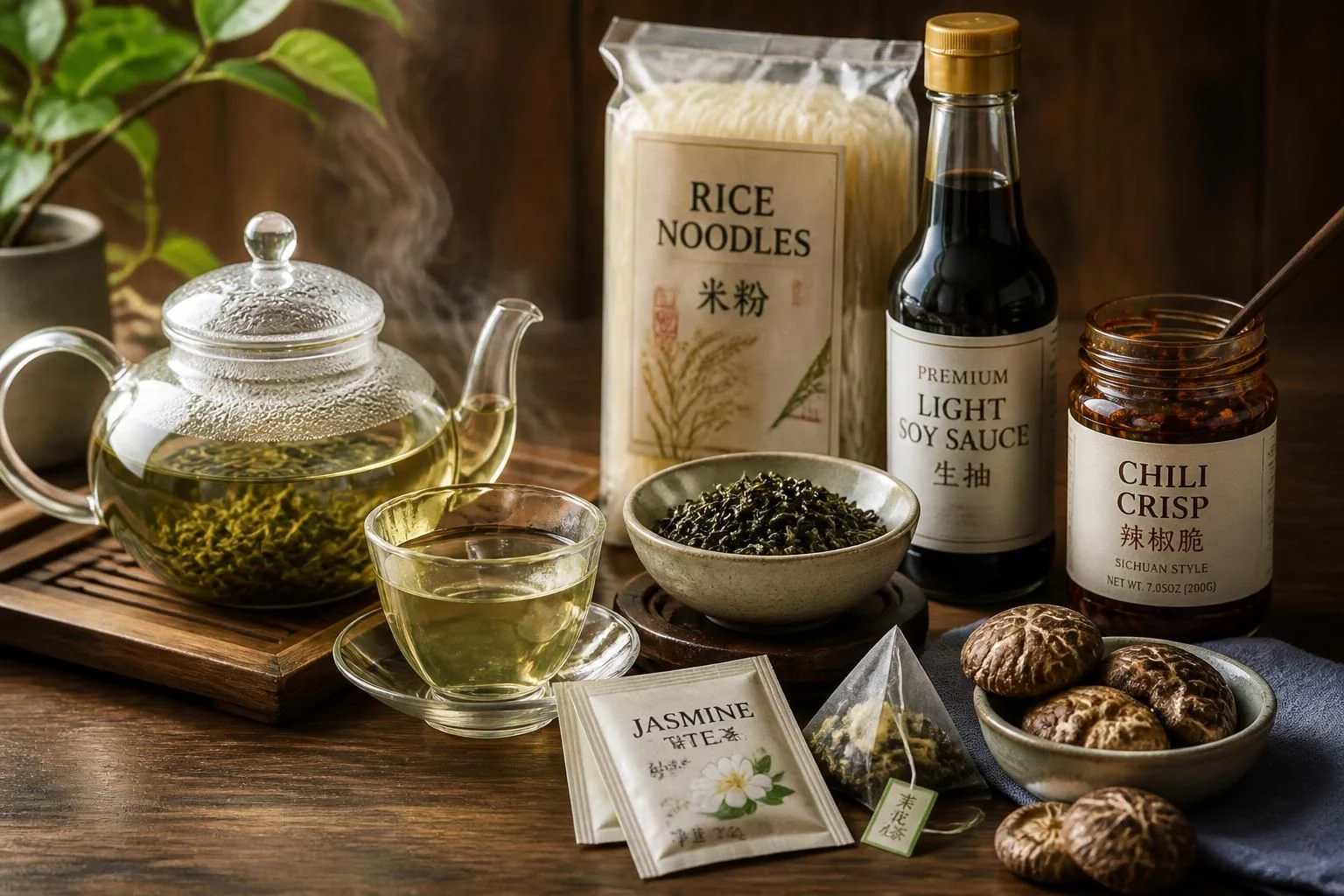
Tea and Pantry Staples
Tea, rice noodles, spices, sauces, and dried mushrooms can be useful starting candidates because buyers can often scope them as shelf-stable packaged goods. That does not make them legally simple or approved. Collect the exact blend or recipe, ingredient declaration, allergen position, storage conditions, shelf-life statement, and the destination label route.
Tea needs particular care around origin, flavourings, blend changes, and any residue or testing questions identified by the importing market. Sauces and chili oils add leakage, seal, oil-stability, and allergen checks. Dried mushrooms and spices need clear product identity and a documented approach to moisture and contaminants. A “natural” or “traditional” claim should be reviewed for the exact market and wording.
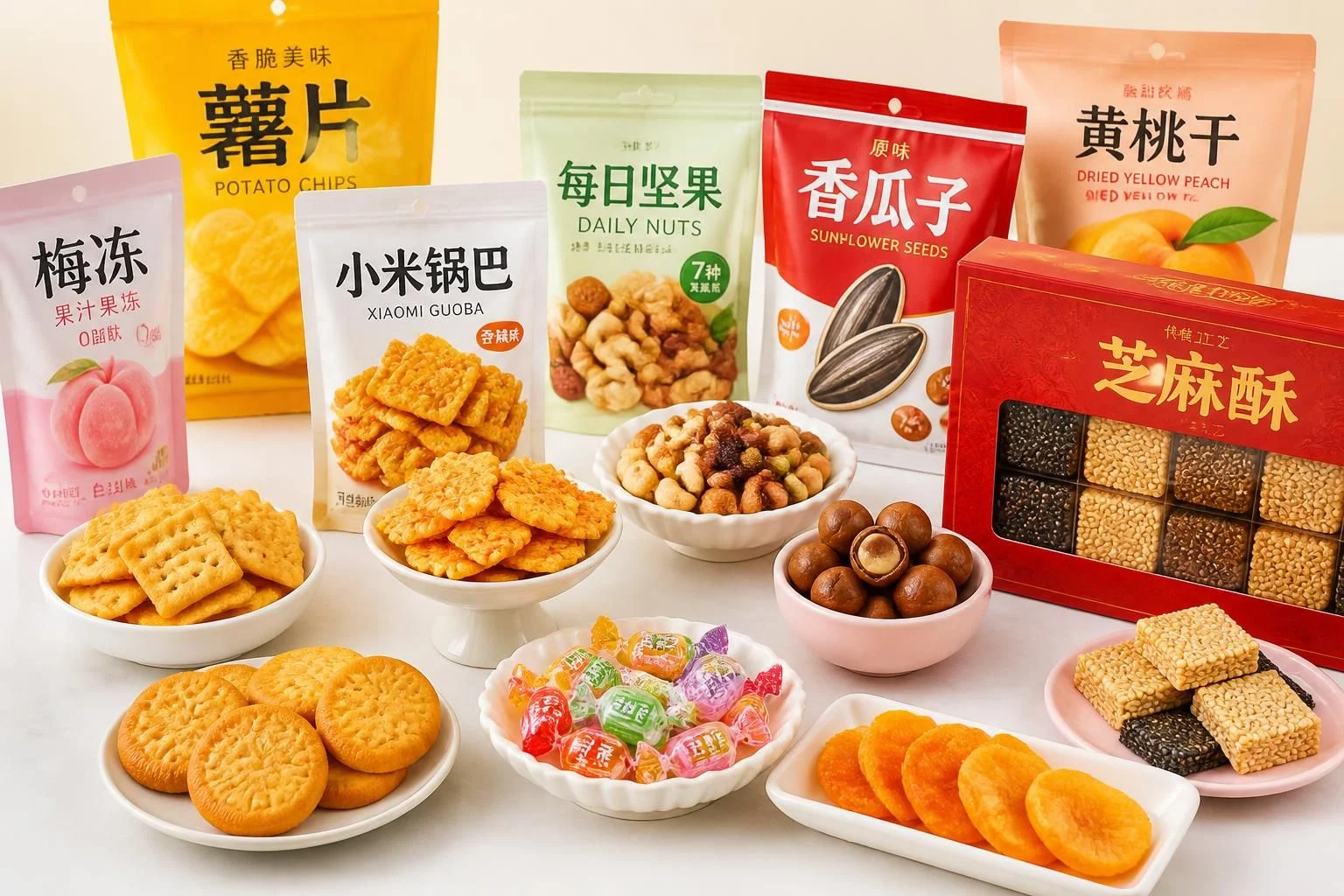
Snacks and Confectionery
Crackers, rice snacks, biscuits, candy, nuts, dried fruit, and sesame sweets can suit retail, gifting, convenience, and specialty channels. Compare texture and packaging after a realistic shipment simulation, not only at the factory. Heat, compression, humidity, and long handling may create broken packs, softened candy, rancidity, or stale stock.
For nuts, seeds, sesame, and mixed snacks, put allergen and cross-contact questions in writing. For biscuits and candy, check colours, sweeteners, flavourings, net quantity, date coding, and artwork. Never assume a supplier can change an ingredient after label approval without reopening the review. The product and the printed pack must remain aligned.
Canned, Pickled, and Prepared Products
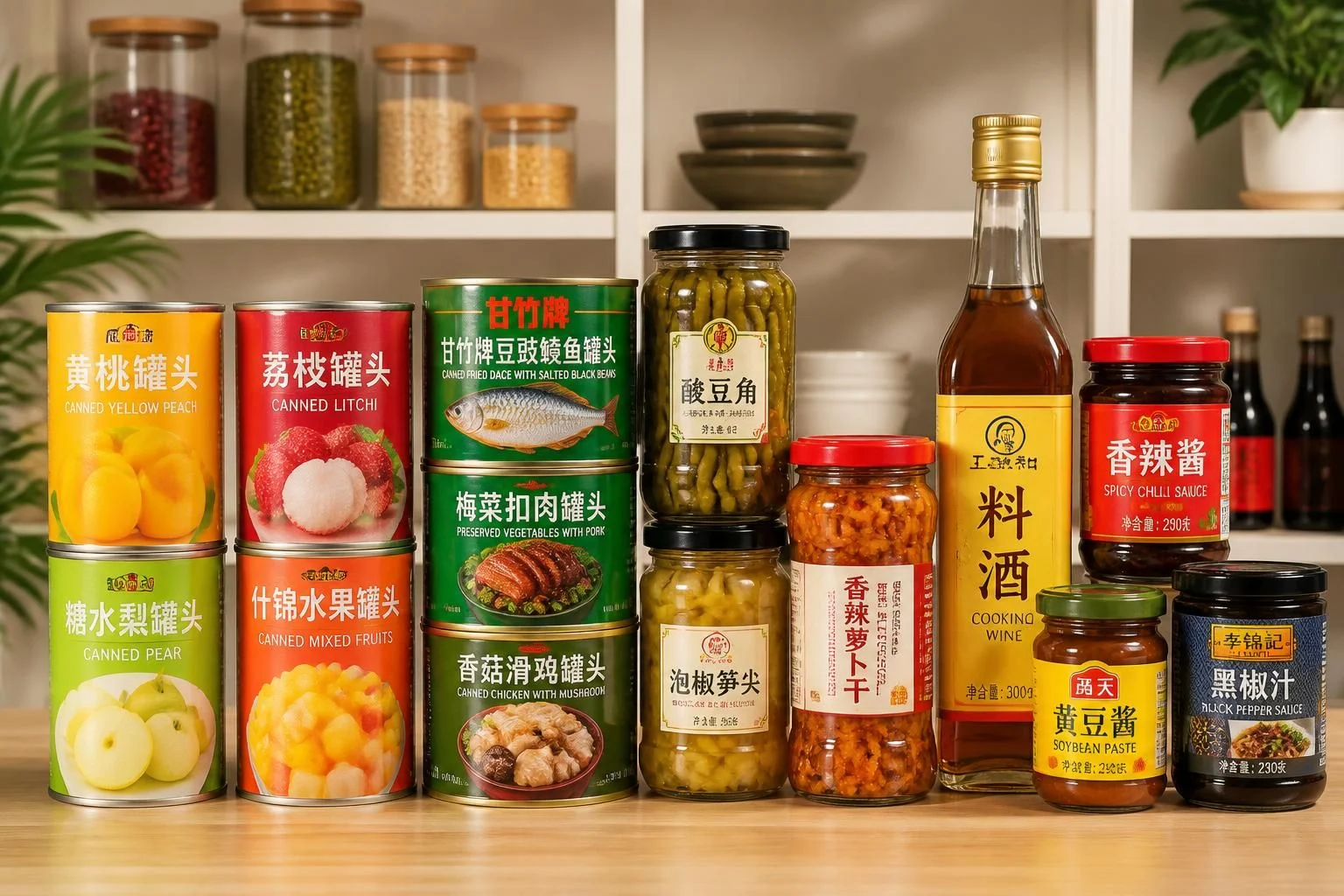
Canned fruit, vegetables, pickles, cooking wine, and prepared sauces can offer longer storage and familiar pantry use. They also bring heavier cartons, glass breakage, leakage, can integrity, or classification questions. Measure the delivered product, not just the empty packaging. A low ex-factory price may become unattractive after freight and loss allowances.
Treat cooking wine and alcoholic drinks as separate from ordinary sauces. Depending on the destination, alcohol content, licensing, excise, labelling, and transport rules may change the import route. Keep product-specific statements narrow until a current destination authority or qualified adviser confirms them.
Ingredients and Beverage Mixes
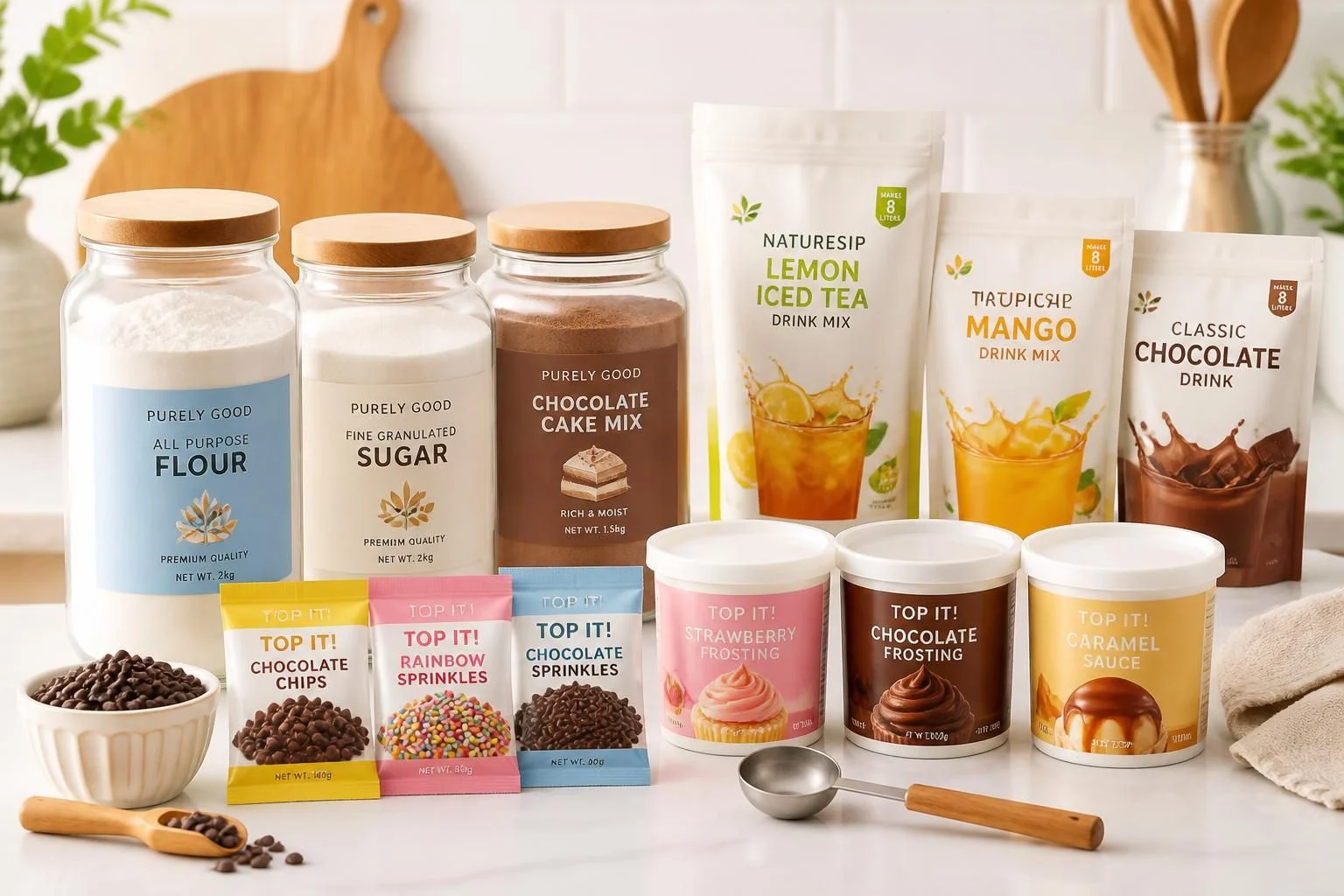
Baking mixes, toppings, dessert ingredients, and non-alcoholic beverage powders are useful for private-label and food-service buyers. Their complexity often sits in composition and claims. Request a stable specification, ingredient and allergen information, intended use, storage, shelf life, and label fields before discussing custom packaging.
Do not describe a powder as a supplement, treatment, energy product, or health solution without specialist review. A marketing phrase can change the regulatory position even when the physical product is unchanged.
Which Food Categories Need Extra Caution?
Fresh produce, meat, dairy, seafood, chilled or frozen goods, infant food, supplements, products with therapeutic claims, and alcohol may be commercially viable but should not be treated as easy first orders. Their route may depend on temperature control, animal or plant origin, permits, official controls, claims, licensing, or product-specific testing in the destination market.
Shelf-stable packaging is often easier to model operationally than a continuous cold chain, but that is not a legal or safety conclusion. A chilled product may require documented handovers, suitable equipment, temperature records, clearance planning, and a contingency route. Animal-origin and plant products may involve additional certificates or inspections. Infant food and supplements need especially careful formula, claims, and label review.
Packaging matters too. A food-contact, recycled-content, organic, or nutrition claim may need evidence that matches the exact material, product, market, and wording. These are separate claim areas, not one universal certificate. Do not reduce compliance to a logo on a supplier listing. The importer remains responsible for the commercial decision and destination requirements.
In supplier work, the most useful pause often comes before a quotation. When a product brief exposes an unconfirmed ingredient, missing shelf-life field, or unclear contracting party, the buyer can fix the question while changing suppliers is still easy. That is a sourcing-control lesson, not proof that a product is unsafe.
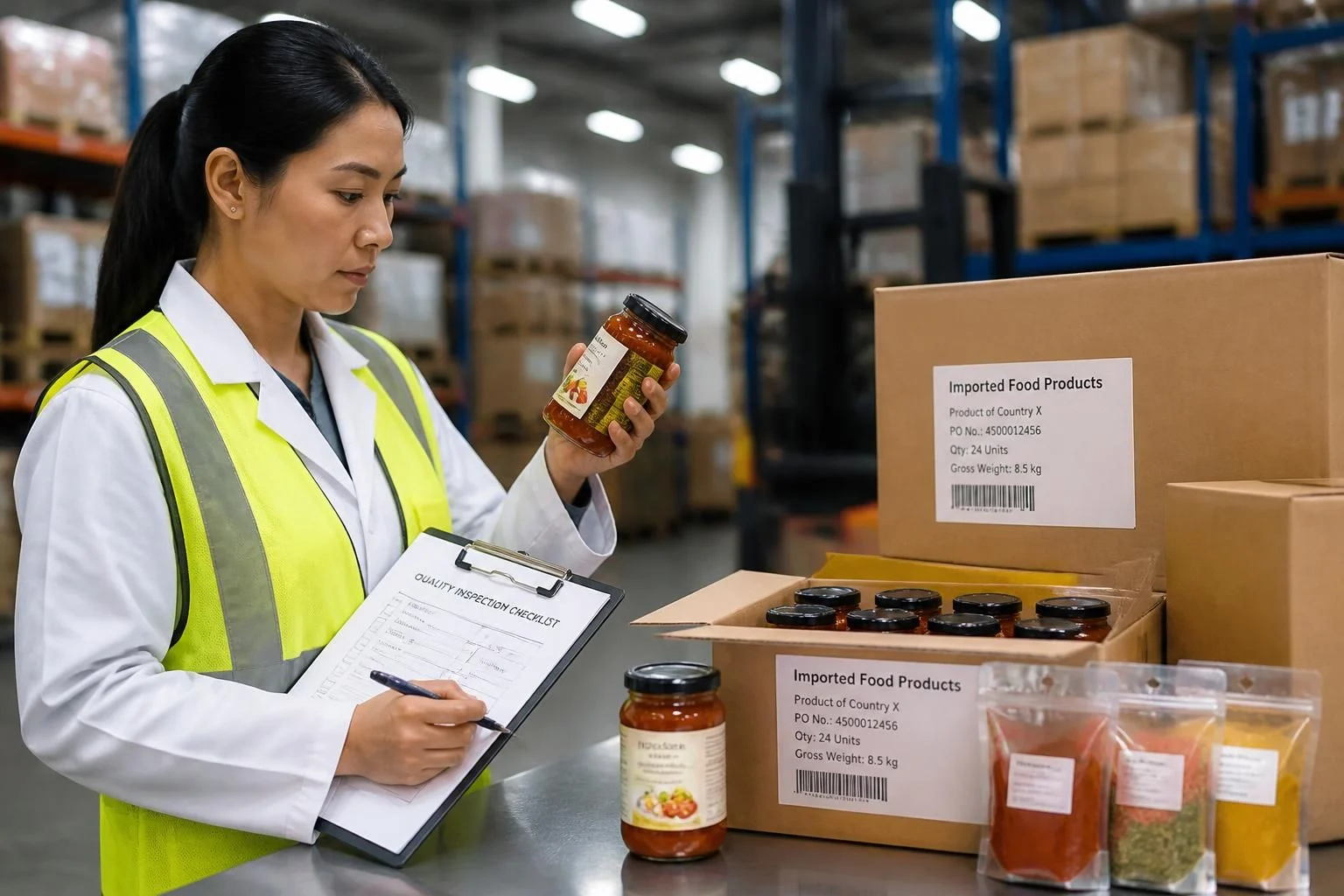
Use a defined quality inspection service scope for visible product, packaging, labels, cartons, quantity, and date/lot coding. Inspection does not replace laboratory work, regulatory review, or the importer’s responsibility.
What Evidence Should You Request From a Chinese Food Supplier?
Before paying a deposit, compare the legal entity, factory scope, sample, formula, allergen statement, label artwork, lot-date approach, shelf-life statement, packaging specification, and available product evidence with the proposed order. The document must match the company, product, date, and scope. A generic “certificate” is not universal approval.
Send every candidate the same product brief. Have the supplier identify the manufacturer, trading company, contracting party, and bank-account holder. Collect a business licence, product specification, ingredient and allergen declaration, storage conditions, shelf life at dispatch, sample, packaging details, and relevant test or analysis documents where applicable.
Then compare like for like. Is the pack size identical? Is the recipe identical? Does the sample match the specification? Is the bank account held by the contracting entity? Does a report identify the product, lot, laboratory, date, and scope? If one answer is missing, record it as an open issue rather than filling the gap with an assumption.
Red flags include a personal payment account, changing product descriptions, unexplained formula substitutions, documents without dates or scope, refusal to provide a sample, and pressure to approve artwork before the formula is fixed. A low quote is a reason to ask better questions, not a reason to skip them.
For the commercial verification sequence, see how to verify suppliers in China and our supplier verification checklist. Buyers who want local coordination can speak with a Yiwu sourcing agent.
How Do Labels, Samples, and Food QC Protect the Order?
A pre-shipment check can compare visible goods with an approved reference: product appearance, packaging, labels, carton marks, quantities, and lot/date coding. It does not, by visual observation alone, establish microbiological safety, allergen absence, or destination eligibility. Those questions require the product testing and regulatory route specified for the market.
Approve a golden sample and written specification before production. Lock product name, ingredients, allergens, net quantity, storage, date and lot fields, manufacturer/importer details, languages, nutrition information, preparation instructions, warnings, and any claims required for your destination. Keep the signed artwork and sample with the order file.
For production, separate the controls. The sample is your reference. The specification defines the limits. Testing answers defined analytical questions. Inspection checks the agreed physical and documented conditions. A shipment record preserves photos, quantities, lot references, corrective actions, and handover details. None of these controls replaces the others.
If you need commercial artwork after approval, our product photography and design service can support pack files and product imagery. It is not a substitute for food-label or legal review.
How Do You Calculate Landed Cost for Imported Food?
Compare food products using landed cost per saleable unit, not the factory quote alone. Include product, samples, packaging and artwork, testing, quality control, China transport, freight, insurance, duty and tax, clearance, delivery, damage, and shelf-life loss. Use our sourcing cost calculator and freight estimate to structure the comparison.
(product + samples + packaging/artwork + testing + QC + China logistics + freight + insurance + duty/tax + clearance + delivery + expected loss) / saleable units received
Consider a fictional comparison: a glass jar may have a lower unit quote than a pouch, but the jar can add weight, cube, breakage protection, and loss exposure. The pouch may cost more at the factory and still produce a better landed result. Measure carton dimensions and gross weight before choosing a mode. Use the CBM calculator for volume and the import duty lookup for a destination-specific estimate.
Ask suppliers to state currency, MOQ, lead time, shelf-life statement at dispatch, carton dimensions, gross weight, Incoterm, and inclusions. Do not treat DDP as a universal food-import answer or assume that an Incoterm settles every regulatory duty. Confirm who is the importer of record and which party handles tax, customs, documentation, food controls, and clearance responsibilities on the actual route.
What Is the Safest First Order for a New Food Importer?
For a first commercial order, many buyers find it easier to narrow the brief to one shelf-stable product with a fixed formula, a reviewed label route, practical remaining shelf life, comparable supplier samples, and a defined QC scope. This is a planning recommendation, not a safety or legal rule. Complexity can rise when temperature control, animal origin, alcohol, claims, or multiple markets enter the same order.
Use this sequence:
- Choose one destination market, customer, and sales channel.
- Gather local demand evidence and set a realistic price point.
- Select three to five candidates from the list.
- Create one product brief and send it to each supplier.
- Compare samples, documents, specifications, and contracting parties.
- Calculate landed cost and expected saleable units.
- Order only after label, route, documentation, and QC questions are reviewed.
Frequently Asked Questions
What food products are easiest to source from China?
Shelf-stable packaged categories such as tea, dry noodles, snacks, sauces, spices, and confectionery are often easier to scope operationally than cold-chain or high-control products. “Easier” does not mean approved or importable everywhere. Exact formula, label, allergens, shelf life, supplier evidence, and destination requirements still need review.
What is the best-selling food product to import from China?
There is no universal answer. The best candidate depends on your country, channel, price point, customers, competition, formula, and ability to import the exact SKU. Use your own demand evidence and supplier samples. Do not rely on an online list that gives no market, year, method, or source.
Can I put my own brand on food from China?
Private label may be possible when the manufacturer, formula, packaging, label, documentation, and destination route support it. Approve the formula and legal label fields before artwork and mass production. A custom logo does not remove ingredient, allergen, claims, shelf-life, testing, or importer responsibilities.
What documents should I request from a Chinese food supplier?
Start with legal-entity and manufacturer details, product specification, ingredient and allergen declaration, storage and shelf-life information, sample, packaging specification, available product evidence, date/lot process, and a like-for-like quotation. The required set changes by product and destination, so match every document to the exact order.
Can a quality inspection prove food is safe to import?
No. Inspection can check agreed visible and documented conditions, such as packaging, labels, quantity, cartons, and date coding. It cannot by itself prove microbiological safety, allergen absence, formula legality, or destination eligibility. Use testing and specialist review where the product and market require them.
Should I use DDP shipping for food from China?
Do not treat DDP as a universal solution. Before booking, identify the importer of record, required documents, taxes, duties, food controls, and clearance responsibilities for the actual route. Incoterms allocate commercial tasks between parties, but they do not automatically replace destination-market law. Compare the full landed cost and confirm which party handles each step.
Conclusion
The 20 products in this guide are a research shortlist, not a promise of sales. Tea, noodles, sauces, snacks, spices, confectionery, canned goods, and mixes may be worth testing when they fit your channel and can be documented. Cold-chain, animal-origin, alcohol, infant, supplement, and claim-heavy products deserve a specialist route.
Start with three to five candidates. Test demand, create one product brief, request comparable samples and evidence, approve the label route, calculate landed cost, and define QC before placing an order. When you are ready, get a food sourcing quote or use the food sourcing guide linked in the introduction.