



One of the first questions buyers ask before sourcing a vehicle from China is: “How much will it actually cost to import?”
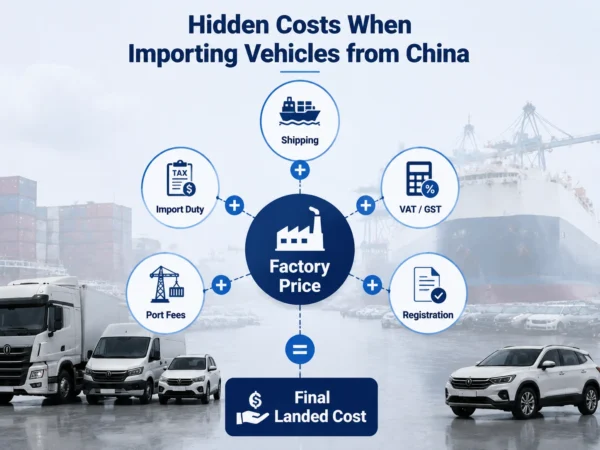
The answer depends on more than just the vehicle’s factory price. In addition to the purchase cost, importers need to consider shipping, customs duties, taxes, inspections, insurance, and local compliance requirements. Understanding these expenses in advance helps you create an accurate budget and avoid unexpected costs.
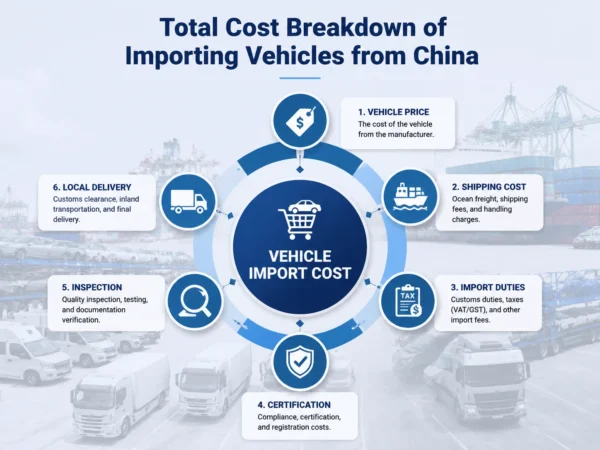
Below is a breakdown of the major costs involved when importing vehicles from China.
1. Vehicle Purchase Price
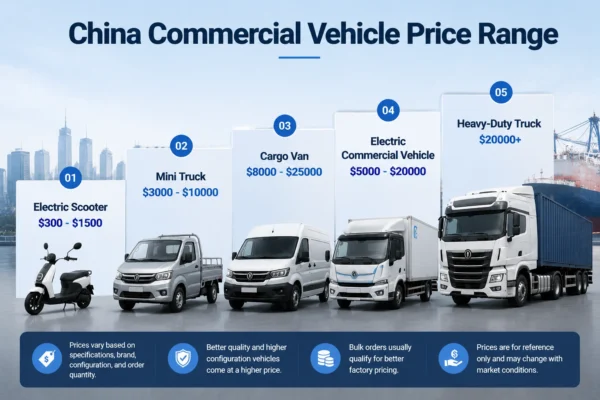
The largest portion of your budget is the cost of the vehicle itself. Prices vary depending on the vehicle type, specifications, battery system (for EVs), engine size, and customization.
| Vehicle Type | Estimated Wholesale Price |
|---|---|
| Electric Scooter | $300 – $1,500 |
| Mini Truck | $3,000 – $10,000 |
| Utility Vehicle (UTV) | $5,000 – $15,000 |
| Cargo Van | $8,000 – $25,000 |
| Electric Commercial Vehicle | $5,000 – $20,000 |
| Heavy-Duty Truck | $20,000 – $80,000+ |
Large-volume orders usually qualify for better factory pricing.
2. Shipping Costs
Shipping costs depend on:
- Destination country
- Shipping method
- Vehicle dimensions and weight
- Number of vehicles
- Current freight rates
Common shipping methods include:
- Ro-Ro (Roll-on/Roll-off): Ideal for complete vehicles and often the most economical option for large shipments.
- Container Shipping: Suitable for smaller vehicles or shipments requiring extra protection.
- Bulk Shipping: Common for large commercial vehicle orders.
Shipping costs can fluctuate significantly, so it’s advisable to request updated freight quotations before placing an order.
3. Import Duties and Taxes
Every country has its own import regulations and tax policies.
Depending on your destination, you may need to pay:
- Import duty
- Value-added tax (VAT) or GST
- Excise tax
- Customs processing fees
- Port handling charges
These costs vary widely by country and by vehicle type. Before ordering, consult your customs broker or local customs authority to estimate the total landed cost.
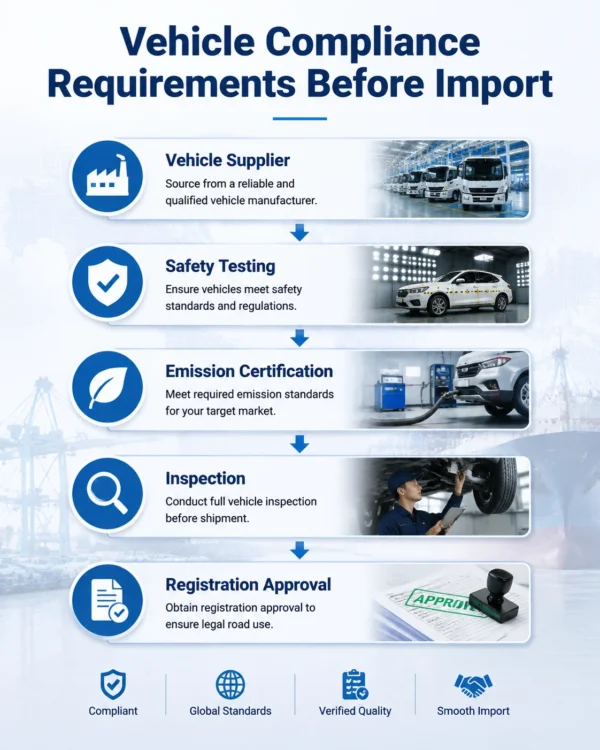
4. Vehicle Certification and Compliance
Many countries require imported vehicles to meet local safety and environmental standards.
Potential compliance costs include:
- Safety testing
- Emissions certification
- Vehicle inspections
- Registration approval
- Compliance modifications
If the vehicle does not meet local regulations, additional modifications may be required after arrival.
5. Insurance
Cargo insurance is strongly recommended when shipping vehicles internationally.
Insurance protects against risks such as:
- Damage during transportation
- Theft
- Weather-related incidents
- Loading and unloading accidents
Although optional in some cases, insurance is a relatively small expense compared to the value of the shipment.
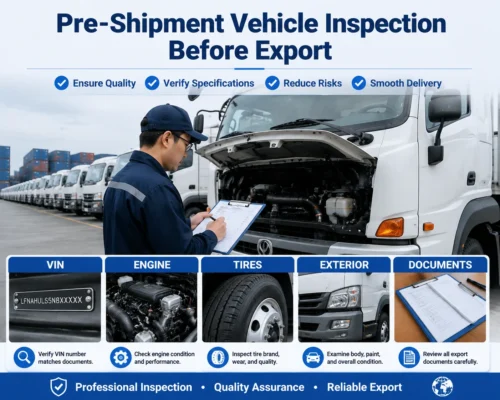
6. Quality Inspection
A pre-shipment inspection helps ensure the vehicles match your specifications before they leave the factory.
Typical inspection services include:
- Appearance inspection
- Functional testing
- Specification verification
- Documentation review
- Packaging inspection
The cost of inspection is generally much lower than the potential losses caused by receiving defective or incorrect vehicles.
7. Customs Clearance and Local Delivery
Once the shipment arrives, additional local costs may include:
- Customs broker fees
- Port storage charges
- Terminal handling fees
- Inland transportation
- Final delivery to your warehouse
Planning these expenses in advance helps avoid delays and unexpected charges.
Sample Cost Breakdown
The following example illustrates the total cost of importing one light commercial vehicle. Actual costs will vary by destination and supplier.
| Cost Item | Example Cost (USD) |
|---|---|
| Vehicle Purchase | $12,000 |
| Ocean Freight | $2,000 |
| Cargo Insurance | $200 |
| Pre-Shipment Inspection | $300 |
| Customs Duties & Taxes | Varies by Country |
| Port & Customs Fees | Varies |
| Inland Transportation | Varies |
Rather than focusing only on the factory price, buyers should calculate the total landed cost before making a purchasing decision.
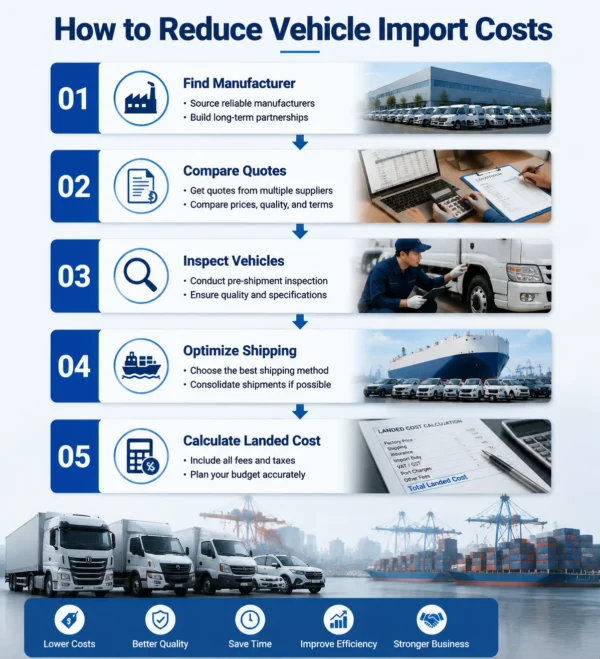
Tips to Reduce Import Costs
You can reduce your overall procurement costs by following these best practices:
- Purchase directly from reliable manufacturers.
- Compare quotations from multiple suppliers.
- Consolidate shipments whenever possible.
- Choose the most suitable shipping method.
- Conduct inspections before shipment to avoid costly issues.
- Understand your country’s import regulations in advance.
- Work with an experienced sourcing agent if you’re unfamiliar with the process.
Frequently Asked Questions
1. How much does it cost to import a vehicle from China?
The total cost depends on the vehicle type, purchase price, shipping method, import duties, taxes, insurance, inspections, and local delivery fees. Instead of focusing only on the factory price, buyers should calculate the total landed cost before making a purchasing decision.
2. What is included in the total cost of importing a vehicle?
The total import cost typically includes:
- Vehicle purchase price
- Ocean freight
- Cargo insurance
- Pre-shipment inspection
- Import duties and taxes
- Customs clearance fees
- Port handling charges
- Inland transportation
- Registration or compliance costs (if required)
The exact costs vary depending on your destination country.
3. Are import duties the same in every country?
No. Import duties, taxes, and customs regulations differ from country to country. Some countries also charge VAT, GST, excise tax, or luxury vehicle taxes. Before placing an order, check your local customs regulations or consult a licensed customs broker.
4. Is it cheaper to import vehicles directly from China?
In many cases, yes. Buying directly from a Chinese manufacturer or a trusted sourcing agent can reduce intermediary costs and provide access to factory pricing. However, buyers should also consider shipping, customs, and compliance expenses when comparing total costs.
5. Which shipping method is the most cost-effective?
The best shipping method depends on the type and quantity of vehicles.
- Ro-Ro Shipping is often the most economical option for complete vehicles.
- Container Shipping provides better protection and is suitable for smaller shipments or electric vehicles.
- Bulk Shipping is commonly used for large commercial vehicle orders.
Your logistics provider can recommend the most suitable option based on your shipment.
6. Can I reduce the cost of importing a vehicle from China?
Yes. Buyers can lower costs by:
- Ordering directly from verified manufacturers
- Comparing multiple supplier quotations
- Consolidating shipments
- Choosing the most efficient shipping method
- Conducting inspections before shipment
- Planning customs clearance in advance
Working with an experienced sourcing partner can also help reduce unnecessary expenses.
7. Should I hire a sourcing agent when importing vehicles?
If you are importing vehicles for the first time or purchasing from multiple suppliers, a sourcing agent can help with supplier verification, price negotiation, factory audits, quality inspections, export documentation, and shipping coordination. This can reduce risks and save time throughout the procurement process.
8. Do I need a pre-shipment inspection?
Yes, a pre-shipment inspection is highly recommended, especially for commercial vehicles and high-value orders. It helps verify that the vehicles meet your specifications, function properly, and are ready for export before payment is finalized.
Final Thoughts
Importing a vehicle from China involves more than negotiating a competitive factory price. Shipping, customs duties, certification, inspections, insurance, and local logistics all contribute to the final landed cost.
By understanding each expense in advance and working with reliable suppliers, buyers can avoid unexpected costs and make more informed purchasing decisions.
If you’re planning to import commercial vehicles, electric vehicles, or specialty trucks from China, Yiwu Buying can help you source qualified manufacturers, arrange inspections, coordinate shipping, and simplify the entire procurement process.