



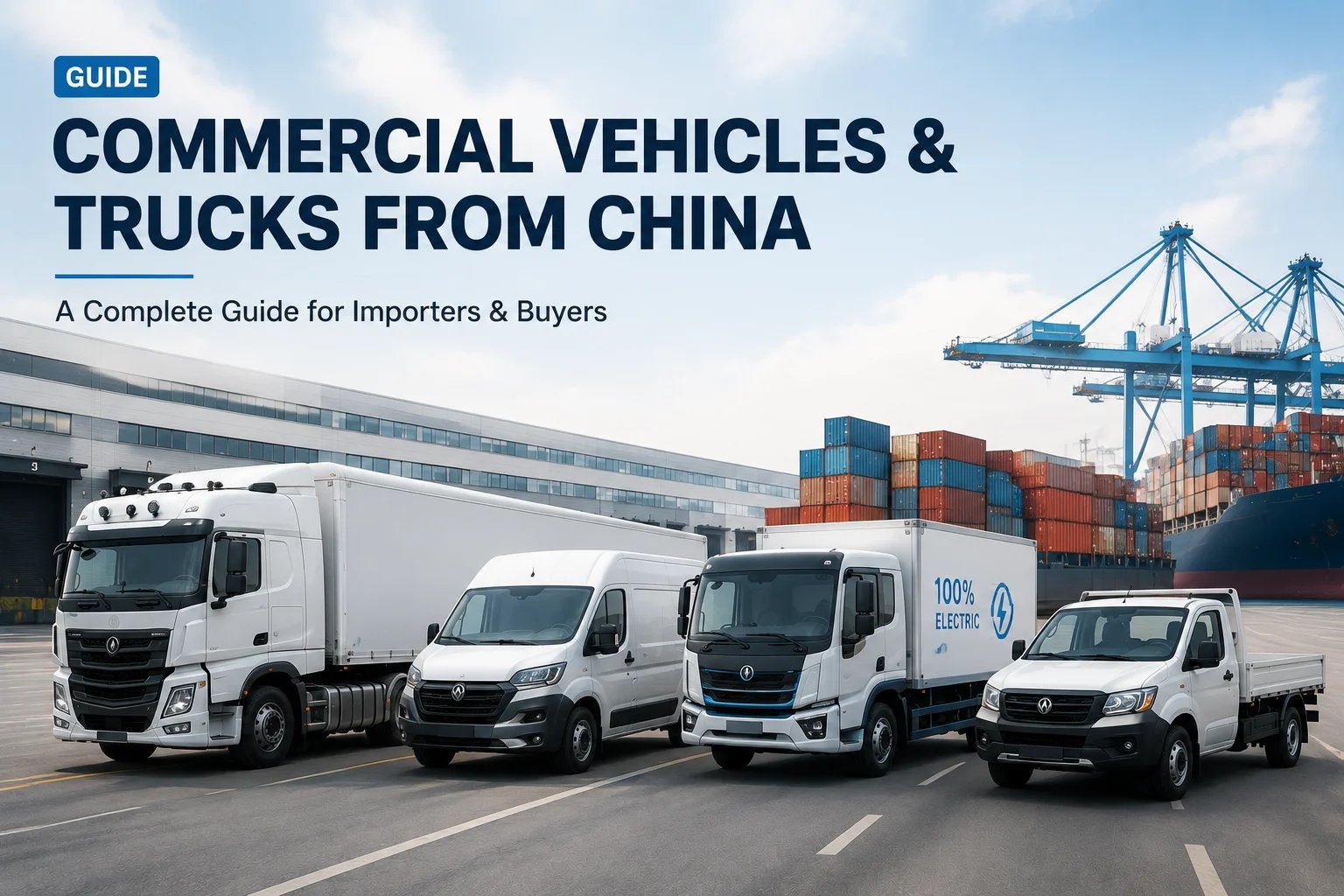
For businesses that depend on transportation, choosing the right commercial vehicle supplier can directly affect operating costs, profitability, and long-term growth.
Whether you are a vehicle distributor expanding your product portfolio, a logistics company upgrading your fleet, or an importer looking for competitive transportation solutions, sourcing commercial vehicles from China has become an increasingly attractive option.
Over the past two decades, China has developed one of the world’s most complete automotive manufacturing ecosystems. From heavy-duty trucks and delivery vans to electric commercial vehicles and specialized utility vehicles, Chinese manufacturers now supply a wide range of transportation solutions to customers across Asia, Africa, the Middle East, Latin America, and Europe.
The biggest advantage is not only lower pricing.
China’s commercial vehicle industry combines:
- Large-scale manufacturing capacity
- Complete automotive supply chains
- Advanced electric vehicle technology
- Flexible OEM customization
- Experienced export services
However, buying commercial vehicles internationally is different from purchasing ordinary products. Buyers need to understand supplier selection, vehicle specifications, certification requirements, shipping methods, and after-sales considerations.
This guide explains everything global buyers need to know before importing commercial vehicles & trucks from China.
What Are Commercial Vehicles?
Commercial vehicles are transportation vehicles designed for business operations rather than personal transportation.
They are commonly used for:
- Carrying goods
- Passenger transportation
- Construction projects
- Agriculture
- Industrial operations
- Urban delivery
- Fleet services
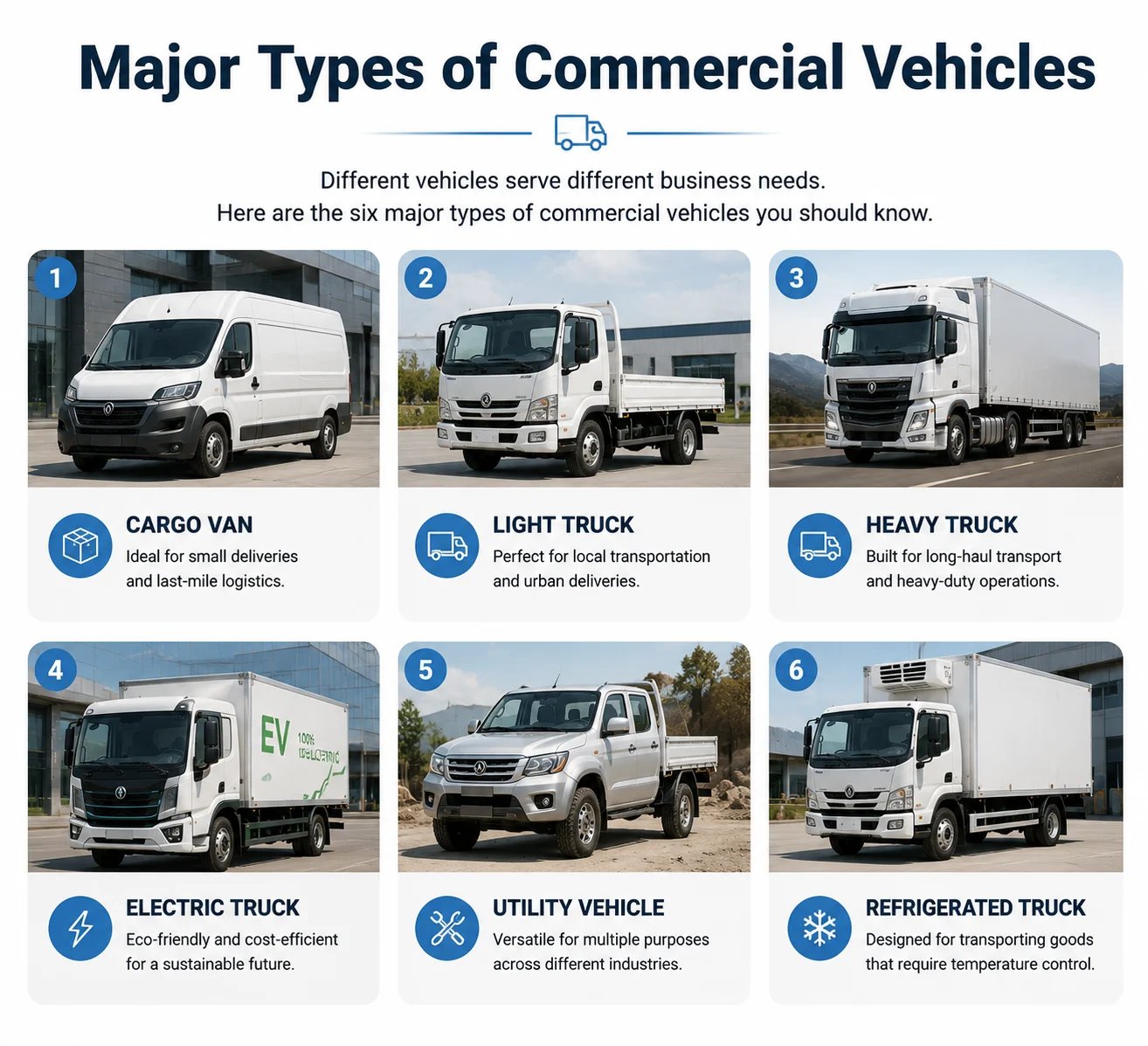
Unlike passenger vehicles, commercial vehicles are built around business requirements such as:
- Load capacity
- Durability
- Operating efficiency
- Maintenance cost
- Long-term reliability
The main categories include:
| Category | Typical Applications |
|---|---|
| Light Commercial Vehicles | Delivery, small business transportation |
| Trucks | Freight and construction |
| Electric Commercial Vehicles | Urban logistics and sustainable transport |
| Utility Vehicles | Agriculture and industrial use |
| Special Vehicles | Emergency and customized applications |
Types of Commercial Vehicles and Trucks Available from China
China’s commercial vehicle market is highly diversified. Buyers can find vehicles for almost every industry and operating environment.
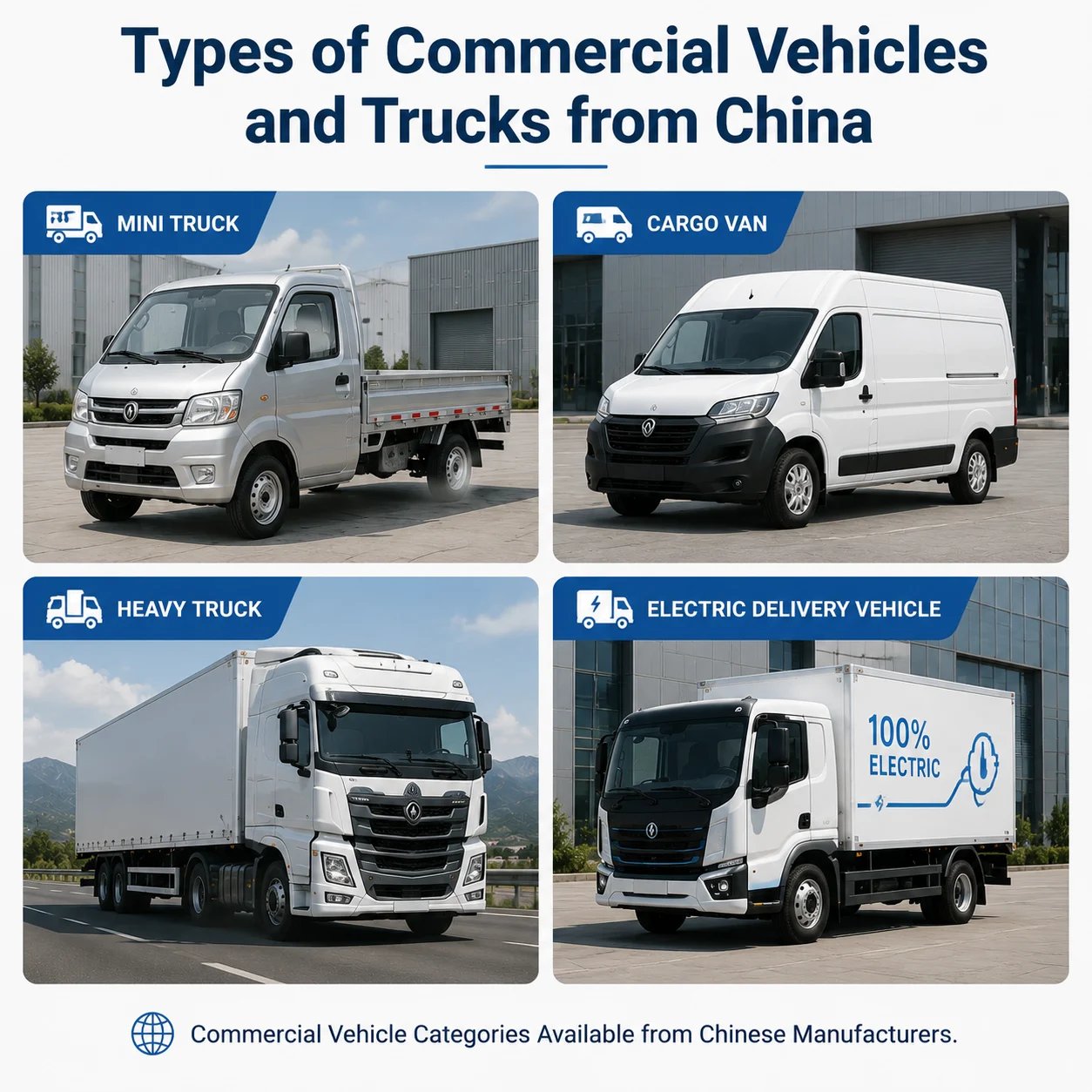
Light Commercial Vehicles (LCVs)
Light commercial vehicles are one of the most popular categories among international buyers.
They are ideal for businesses that need flexible transportation solutions without the higher costs associated with heavy trucks.
Common examples include:
- Mini trucks
- Cargo vans
- Pickup trucks
- Small delivery vehicles
Typical applications:
- Food distribution
- Retail delivery
- E-commerce logistics
- Urban transportation
For many developing markets, light commercial vehicles provide an affordable entry point for businesses building local delivery networks.
Heavy-Duty Trucks
Heavy-duty trucks are designed for demanding transportation tasks where durability and carrying capacity are essential.
Common types include:
- Tractor trucks
- Dump trucks
- Cargo trucks
- Engineering trucks
They are widely used in:
- Construction
- Mining
- Infrastructure projects
- Long-distance freight
When selecting heavy trucks, buyers should focus on:
- Engine performance
- Maximum load capacity
- Fuel efficiency
- Maintenance support
- Spare parts availability
Electric Commercial Vehicles
Electric commercial vehicles have become one of the fastest-growing segments in China’s automotive industry.
Driven by improvements in battery technology and increasing demand for sustainable transportation, Chinese manufacturers now offer many electric solutions.
Examples include:
- Electric delivery vans
- Electric cargo trucks
- Electric buses
- Electric utility vehicles
For businesses, the main benefits are:
Lower Operating Costs
Electric vehicles usually have lower energy and maintenance expenses compared with traditional fuel vehicles.
Better Urban Performance
Electric commercial vehicles are especially suitable for:
- City deliveries
- Warehouses
- Industrial parks
- Short-distance transportation
Environmental Compliance
As more countries introduce stricter emissions regulations, electric commercial vehicles can help companies prepare for future transportation requirements.
Utility Vehicles and Specialty Vehicles
Many industries require vehicles designed for specific working conditions.
China supplies various utility solutions, including:
- Farm vehicles
- Electric UTVs
- Industrial transport vehicles
- Airport vehicles
- Resort vehicles
Special-purpose vehicles are also available, such as:
- Refrigerated trucks
- Mobile food trucks
- Garbage trucks
- Water trucks
- Emergency vehicles
One major advantage of Chinese manufacturers is customization flexibility. Buyers can often modify vehicle designs according to their operational needs.
Why Buy Commercial Vehicles from China?
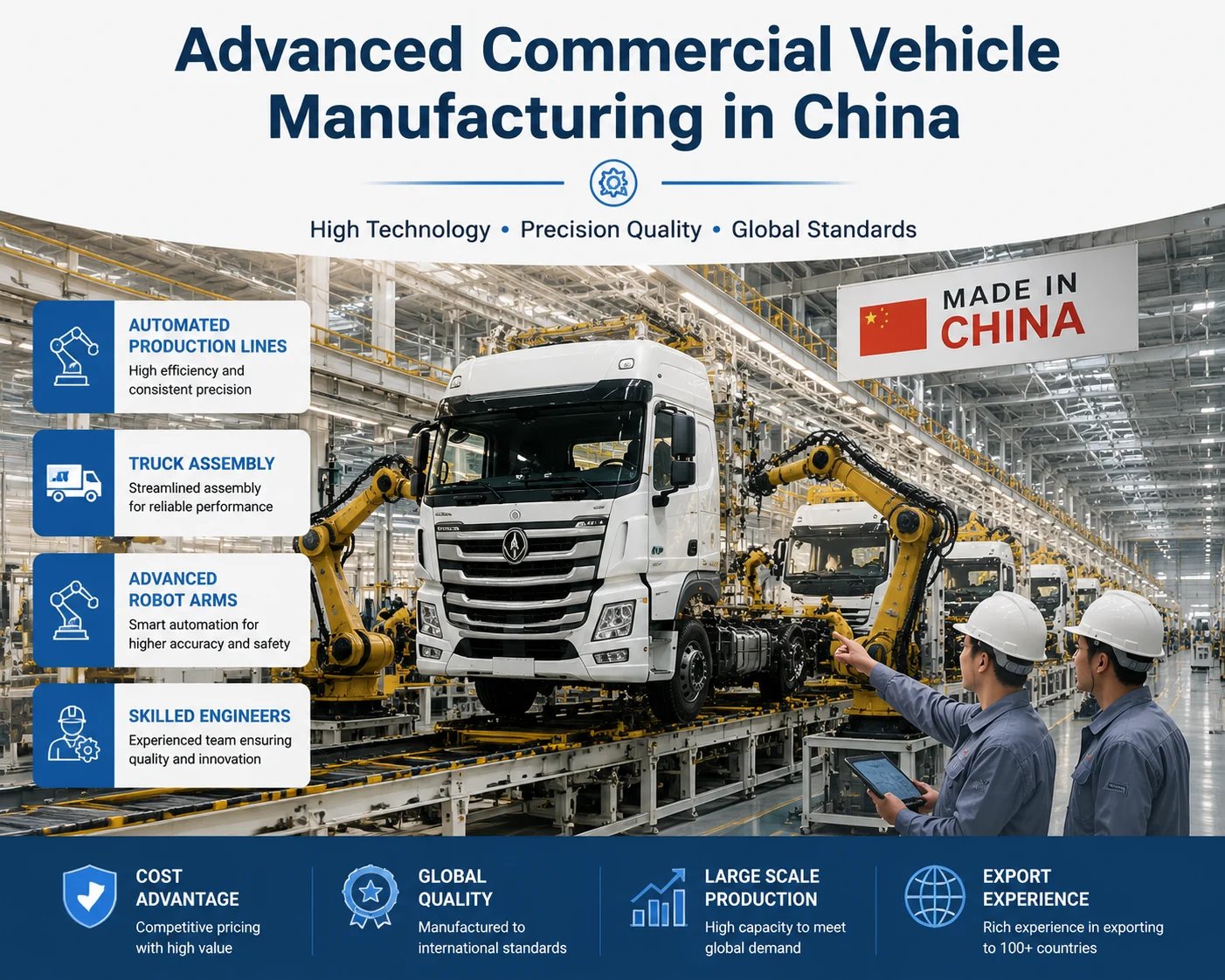
Competitive Manufacturing Costs
One of the main reasons global buyers choose China is cost efficiency.
China has developed a complete automotive supply chain covering:
- Vehicle assembly
- Auto components
- Batteries
- Electronics
- Manufacturing equipment
This allows suppliers to produce commercial vehicles at competitive prices while maintaining production scale.
For wholesalers and distributors, direct sourcing from China can create stronger pricing advantages compared with purchasing through local intermediaries.
Wide Selection of Models
Another advantage is product variety.
A buyer looking for commercial vehicles from China can usually find multiple options based on:
- Budget
- Application
- Market requirements
- Regulations
For example:
A logistics company may need electric delivery vans.
A construction company may require heavy-duty trucks.
A farm distributor may need utility vehicles.
China’s supplier ecosystem can support all these requirements.
OEM Customization Capability
Many international buyers are not only looking for standard vehicles.
They want products customized for their own markets.
Chinese manufacturers commonly offer:
- Brand logo customization
- Exterior color options
- Interior modifications
- Battery upgrades
- Cargo configuration changes
This is especially valuable for distributors building their own vehicle brands.
How to Choose a Reliable Commercial Vehicle Supplier in China
Finding a supplier is easy.
Finding the right supplier is the real challenge.
Before placing an order, buyers should evaluate several important factors.
Check Factory Capability
A professional supplier should be able to provide:
- Factory information
- Production capacity
- Export experience
- Product certifications
- Customer references
A company that only acts as a trading company may not always provide the same level of quality control as a manufacturer.
Verify Certifications
Commercial vehicles must meet destination-country requirements.
Depending on the market, buyers may need:
- CE certification
- EEC certification
- DOT approval
- EPA compliance
- Local vehicle registration requirements
Always confirm regulations before production begins.
Evaluate Long-Term Support
Commercial vehicles are long-term business assets.
Before purchasing, ask about:
- Warranty terms
- Spare parts supply
- Technical support
- Maintenance assistance
A cheaper vehicle without reliable support can become more expensive over time.
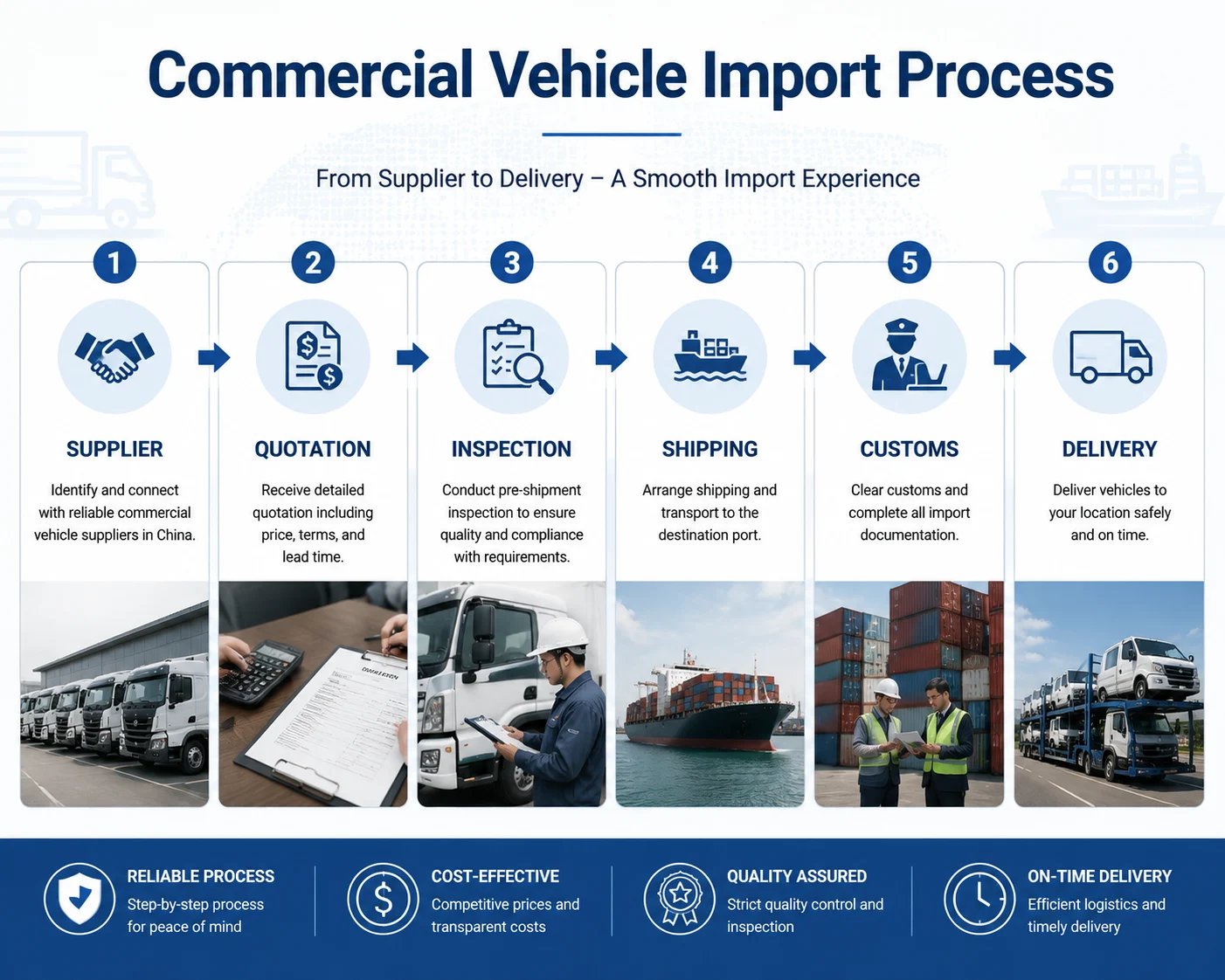
Commercial Vehicle Import Process from China
Importing commercial vehicles involves several stages.
Step 1: Define Your Requirements
Before contacting suppliers, prepare:
- Vehicle type
- Quantity
- Application
- Destination country
- Required specifications
Clear requirements help suppliers provide accurate quotations.
Step 2: Find and Compare Suppliers
Compare suppliers based on:
- Product quality
- Manufacturing capability
- Price
- Delivery time
- Export experience
Do not choose only based on the lowest quotation.
Step 3: Confirm Vehicle Specifications
Important details include:
- Engine or motor type
- Battery capacity
- Load capacity
- Dimensions
- Safety features
- Certification requirements
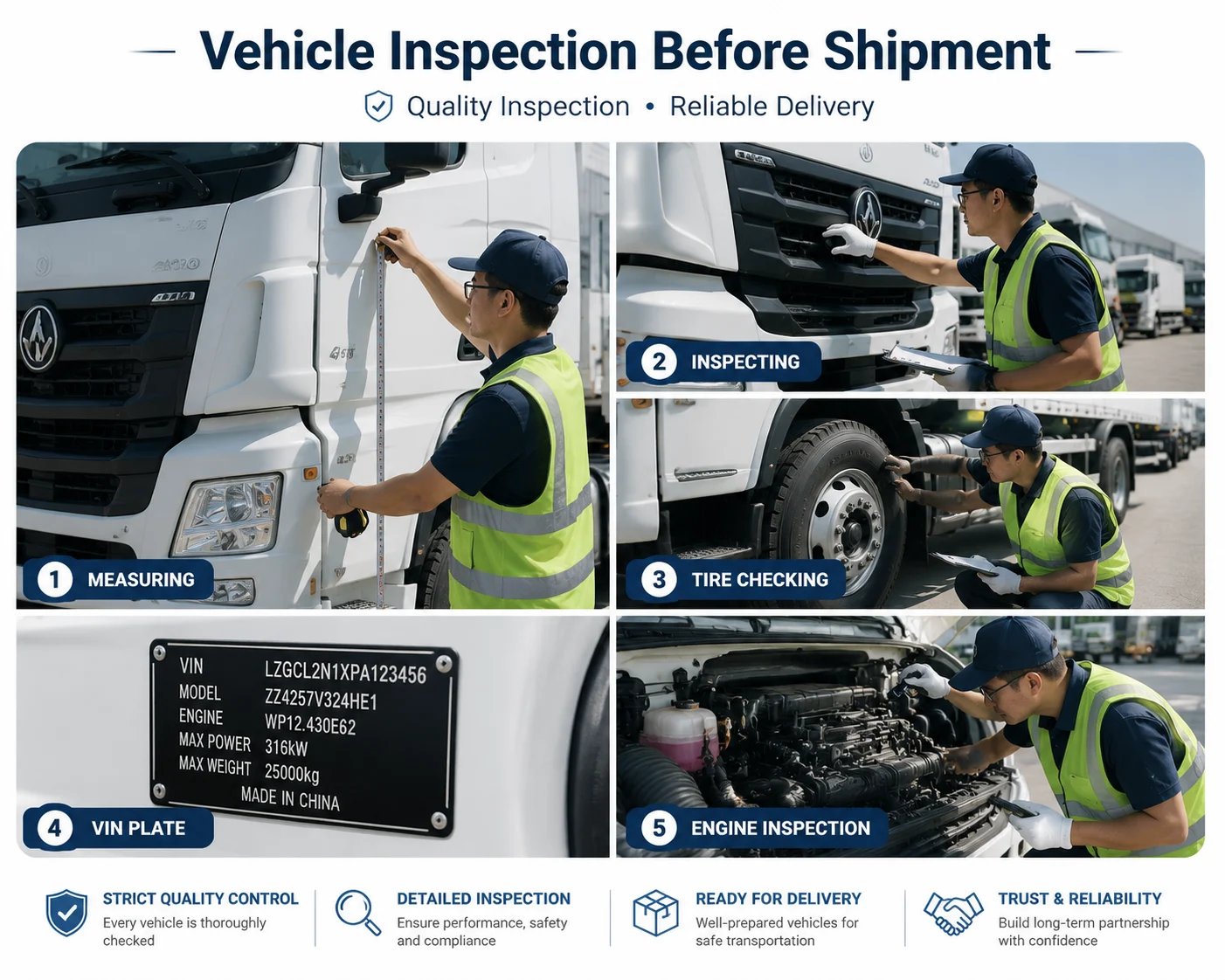
Step 4: Quality Inspection Before Shipment
Professional buyers usually conduct inspection before shipping.
Inspection may include:
- Appearance check
- Performance testing
- Component verification
- Documentation review
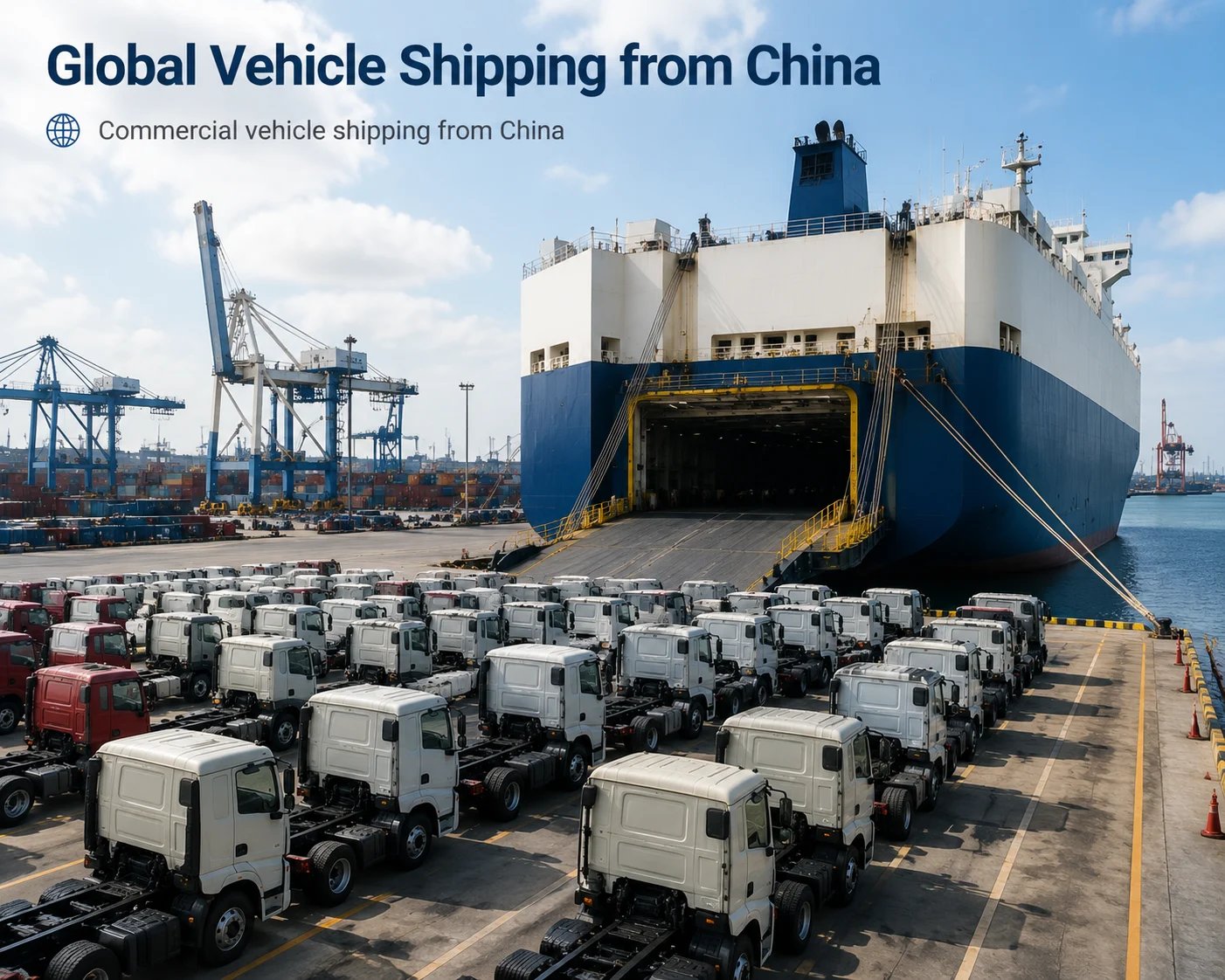
Step 5: Arrange International Shipping
Common shipping options include:
Ro-Ro Shipping
Suitable for complete vehicles.
Advantages:
- Efficient loading
- Lower handling risk
Container Shipping
Suitable for smaller vehicles and certain EV models.
Bulk Shipping
Used for large commercial orders.
How Much Do Commercial Vehicles &Trucks from China Cost?
Prices vary depending on specifications, quantity, and customization.
Typical wholesale ranges:
| Vehicle Type | Approximate Price |
|---|---|
| Mini Truck | $3,000 – $10,000 |
| Cargo Van | $8,000 – $25,000 |
| Electric Delivery Vehicle | $5,000 – $20,000 |
| Utility Vehicle | $5,000 – $15,000 |
| Heavy Truck | $20,000 – $80,000 |
The final cost depends on:
- Vehicle configuration
- Battery system
- Order quantity
- Certification requirements
- Shipping destination
Large-volume buyers usually receive better factory pricing.
Leading Commercial Vehicle Manufacturers in China
China has many experienced commercial vehicle manufacturers.
Some well-known companies include:
- FAW Group
- Dongfeng Motor
- Sinotruk
- Foton Motor
- JAC Motors
These manufacturers produce:
- Heavy trucks
- Light trucks
- Vans
- Electric commercial vehicles
- Specialty vehicles
For smaller importers, working with an experienced sourcing partner can make supplier verification and communication easier.
Common Mistakes When Importing Commercial Vehicles
Choosing Only the Lowest Price
The cheapest quotation may not include:
- Better components
- Proper certification
- After-sales support
Ignoring Local Regulations
A vehicle that works well in China may require modifications before entering another market.
Always check:
- Emission standards
- Safety requirements
- Registration rules
Not Planning Spare Parts
Commercial vehicles operate continuously.
Before purchasing, confirm:
- Spare parts availability
- Maintenance solutions
- Technical support
Why Choose Yiwu Buying for Commercial Vehicle Sourcing?
Importing vehicles from China involves many decisions:
- Finding qualified factories
- Comparing suppliers
- Negotiating prices
- Checking quality
- Managing export procedures
Yiwu Buying helps international buyers simplify the sourcing process.
Our services include:
Supplier Matching
Finding suitable commercial vehicle manufacturers based on your requirements.
Factory Verification
Checking supplier capability and reliability.
Price Negotiation
Helping buyers obtain competitive factory pricing.
Quality Inspection
Inspecting vehicles before shipment.
Export Coordination
Supporting documentation and shipping arrangements.
Whether you are looking for electric commercial vehicles, trucks, utility vehicles, or customized transportation solutions, Yiwu Buying helps businesses source vehicles from China with greater confidence.
Frequently Asked Questions
1. Can I import commercial vehicles directly from China?
Yes. International buyers can purchase commercial vehicles directly from Chinese manufacturers, exporters, or through a professional sourcing agent. Working with a sourcing partner can simplify supplier verification, quality inspection, and export coordination, especially for first-time importers.
2. What types of commercial vehicles can I source from China?
China manufactures a wide range of commercial vehicles, including:
- Light commercial vehicles (LCVs)
- Cargo vans
- Heavy-duty trucks
- Dump trucks
- Tractor trucks
- Electric commercial vehicles
- Utility vehicles (UTVs)
- Refrigerated trucks
- Special-purpose vehicles
The available models depend on the manufacturer and your target market’s regulations.
3. Are commercial vehicles made in China reliable?
Yes. Many Chinese manufacturers produce commercial vehicles that meet international quality standards and export to markets worldwide. The key is to choose a reputable supplier, verify certifications, and conduct a pre-shipment inspection before delivery.
4. How much does it cost to import commercial vehicles from China?
The total import cost depends on several factors, including:
- Vehicle type and specifications
- Order quantity
- Shipping method
- Import duties and taxes
- Certification requirements
- Insurance and customs clearance fees
Requesting quotations from multiple suppliers can help you compare costs and make informed purchasing decisions.
5. What certifications should I check before importing trucks from China?
Certification requirements vary by country. Depending on your destination market, you may need documents such as:
- CE Certification
- EEC Certification
- DOT Compliance
- EPA Compliance
- Certificate of Origin
- Commercial Invoice
- Bill of Lading
Always confirm local import regulations before placing an order.
6. What is the typical MOQ for commercial vehicles?
Minimum order quantities (MOQs) vary by manufacturer. Some suppliers accept trial orders of one or two vehicles, while others require larger wholesale orders. Customized or OEM projects generally have higher MOQs than standard models.
7. How long does it take to ship commercial vehicles & trucks from China?
Shipping times depend on the destination country and shipping method.
As a general guide:
- Southeast Asia: 2–4 weeks
- Middle East: 3–5 weeks
- Europe: 4–6 weeks
- Africa: 4–8 weeks
- South America: 6–10 weeks
Additional time may be required for customs clearance and inland transportation.
8. Should I buy directly from a manufacturer or use a sourcing agent?
Both options have advantages.
Buying directly from a manufacturer may reduce costs if you already have experience working with Chinese suppliers. However, if you need assistance with supplier verification, factory audits, price negotiation, quality inspections, or export logistics, a professional sourcing agent can help reduce risks and save time.
9. Can commercial vehicles be customized with my own brand?
Yes. Many Chinese manufacturers offer OEM and ODM services. Depending on the supplier, you can customize:
- Company logo
- Vehicle color
- Cargo box design
- Interior configuration
- Battery capacity (for electric vehicles)
- Additional accessories
Customization requirements and minimum order quantities vary by factory.
10. Why choose Yiwu Buying for commercial vehicle sourcing?
Yiwu Buying helps international buyers source commercial vehicles from reliable Chinese manufacturers. Our services include supplier sourcing, factory verification, price negotiation, quality inspection, export documentation, and shipping coordination. Whether you need light commercial vehicles, heavy-duty trucks, or electric commercial vehicles, we help streamline the sourcing process and reduce procurement risks.